The move was simple, in theory.
Each person backs up towards a centre where we’d collide. Everyone throws their hands in the air in surprise.
And the dogs come running.
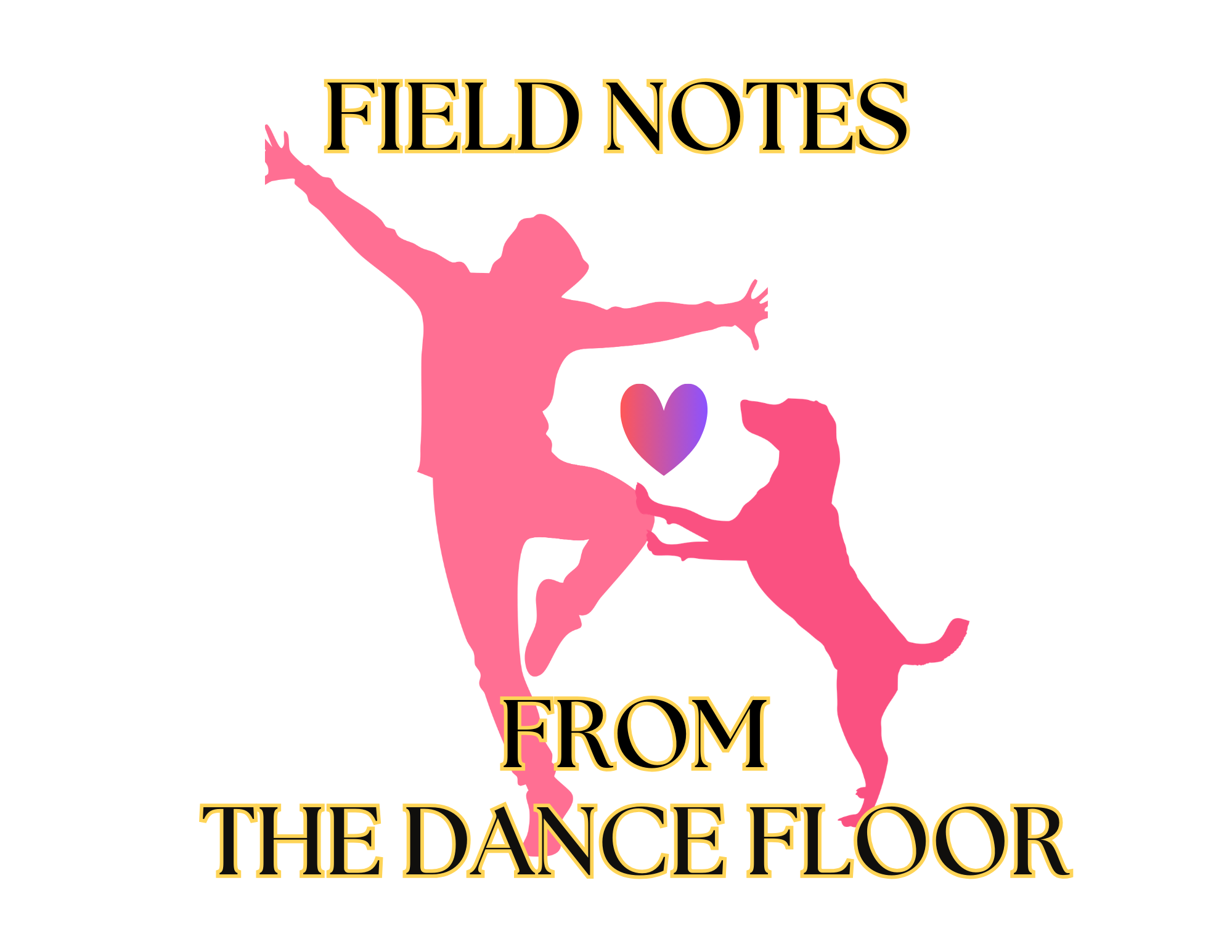
That was the choreography — my first piece of canine freestyle choreography, ever. “The Pink Panther Theme,” an exaggerated sneaky backstep, and a sit-stay that had to hold until the moment it didn’t.
I was terrified Kirby would break it early. That he’d drift, or decide the audience needed him more than the music did.
(That last part, to be fair, was always a genuine risk. Kirby had a gift for soaking in audience adoration at moments that were choreographically inconvenient for both of us).
He didn’t.
He held his stay across the floor, watched me back into the other handlers, watched us throw our hands up — and came running like he’d known every part of the dance already.
I want to tell you something about Kirby before I go further.
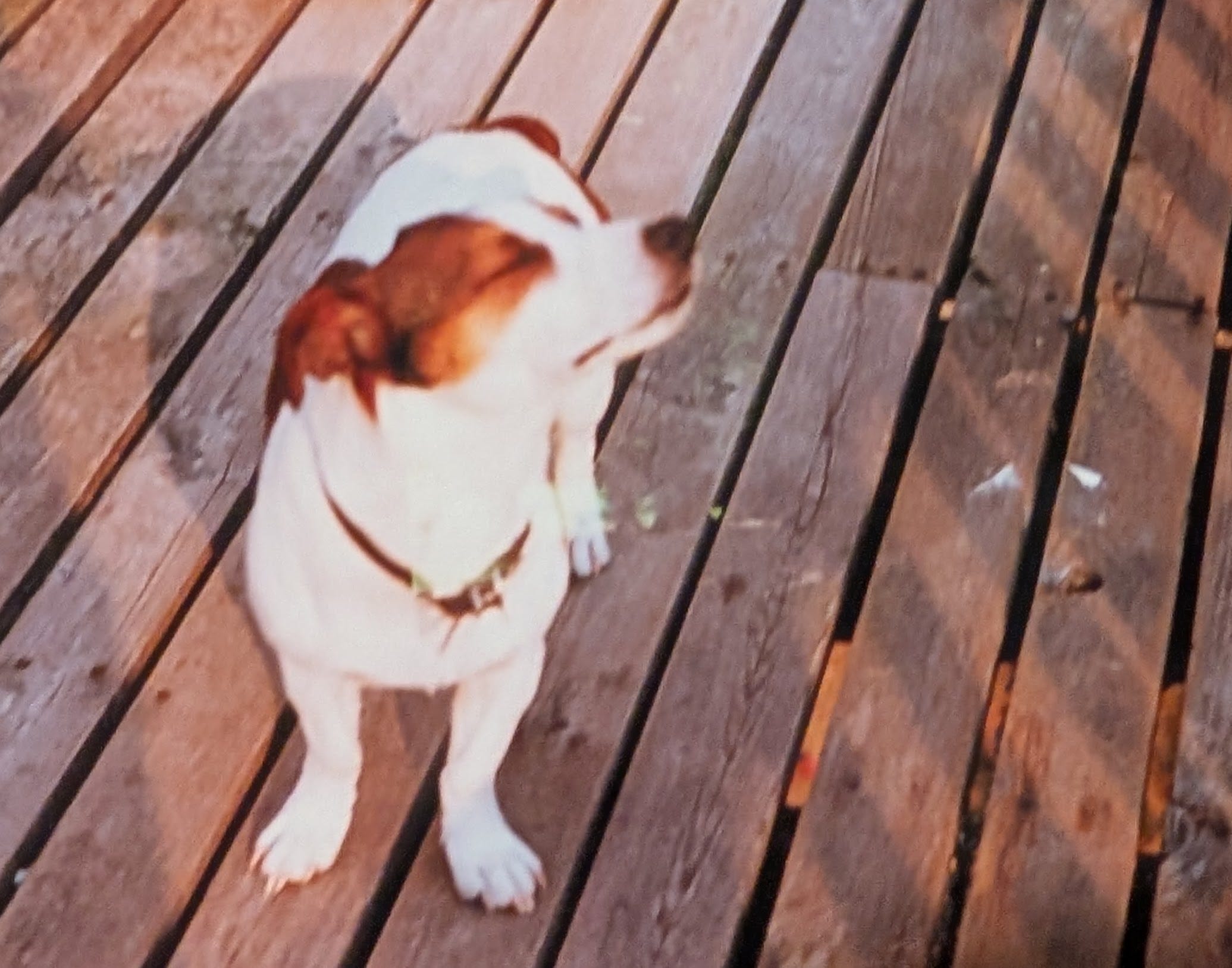
He was a Jack Russell Terrier. My first dog. I got him for my thirteenth birthday and we were, from the beginning, each other’s entire world.
We were also, by every objective measure, a disaster in obedience class.
He was terrible. I was worse. And one day the instructor looked at us — really looked at us — and said the class wasn’t right for us. That we needed agility and canine freestyle instead.
She pointed us toward a practice barn.
The next week, I walked into the barn with a dog who had an attitude, a history of flunking structured work, and now no leash between him and every distraction the room offered.
I was braced for the version of Kirby who couldn’t hold it together. The version who’d break his stay, zoom around the room, yell at the other dogs and their people, all the while ignoring me entirely.
But “The Pink Panther Theme” asked something different of him; it asked him to hold still and watch me. And he did.
When I threw my hands in the air, he came like he’d known every part of the dance already.
Solo work builds partnership. There’s no question about that.
But synchro — dancing as part of a group, a team within teams, multiple handlers and dogs moving together inside a shared piece of music — tests skills solo work can’t manufacture.
It also raises the stakes in every direction at once.
Your dog has to stay in relationship with you while another dog works nearby, while the room fills with the particular energy of multiple partnerships moving in coordination. The distractions aren’t hypothetical; they’re right there, breathing and moving right beside you.
And you have to subordinate certain elements. Not your partnership — but certainly some of your instinct to manage it privately. In a group piece, you can’t adjust on the fly in the ways solo work allows. You’re part of a shape that belongs to everyone. Your timing isn’t just about you and your dog. It’s about the human you’re about to back into.
Which means you have to trust your dog to hold their end while you hold yours.
That’s the thing synchro reveals that I didn’t expect: not how well-trained your dog is, but how genuinely they’re oriented toward you. Whether, in a room full of competing information, you’re still their primary signal.
Kirby answered that question in the first run-through of the first dance we ever learned together.
He wasn’t watching the other dogs. He wasn’t working the room. He was watching me, waiting — and when the cue came, he came.
I think about that barn now when I’m teaching.
I run classes where dogs are off-leash in a shared space, and there’s always a barrier — always another dog on the other side of it, always the possibility of a pull toward that edge. Every dog in the room could go. Most of them don’t.
They come back to their person instead.
And what strikes me, every time, is how natural it looks. How little it costs them. No visible struggle, no heroic act of self-control. Just orientation. The person is where they belong, so that’s where they go.
I sometimes wonder if they know it’s happening.
Discovering a new move together changes a partnership — deepens it in ways that are hard to name but easy to feel. Each new moment of shared language, each time you ask something your dog has never done before and they find a way to answer, adds another thread to whatever it is that holds you together. The connection doesn’t announce itself. It just quietly becomes more weight-bearing.
The handlers don’t always see it in the moment. They’re too busy managing the worry — will my dog hold it together, will they break, will they run. They haven’t yet considered the possibility that their dog isn’t even tempted.
So I let it happen first.
I watch the dog make the argument, clear and unhurried.
Then I point it out.